…Says current system suffocating development, calls for regional autonomy
….Proposes parliamentary model, referenda for Yoruba integration
A socio-political group, Atunto Foundation, has called for a radical restructuring of Nigeria’s political and administrative system, warning that the country is trapped in a prolonged crisis threatening development, equity, and regional autonomy.
The Foundation, a younger professional arm of Afenifere, said Nigeria’s current governance structure is overly centralized and no longer sustainable, urging urgent reforms to decentralize power and strengthen local governance.
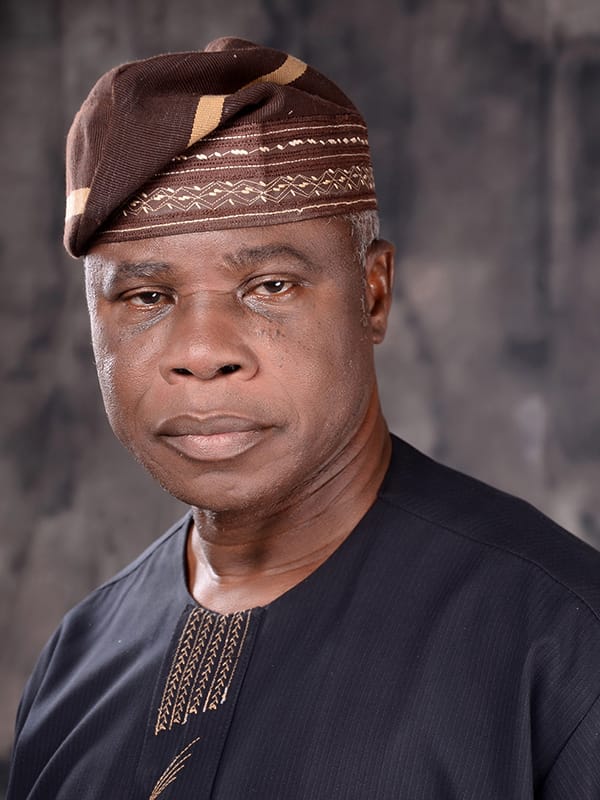
Speaking during an interview on Frontline, a public affairs programme on Eagle 102.5 FM, Ilese-Ijebu, Ogun State, the Director of Research at Afenifere and Secretary General of Atunto Foundation, Dr. Akin Fapohunda, described the nation as being in “prolonged labour,” requiring urgent intervention.
“Where we are now is totally suffocating. It is not encouraging and not optimal at all. We need a change very urgently,” he said.
Push for Regional Autonomy
Fapohunda stressed that the group is not merely criticizing the system but offering a practical blueprint aimed at restoring regional autonomy, particularly in the Yoruba region.
He recalled the period between 1954 and 1960 as the “golden era” of regional governance, driven by visionary leaders such as Obafemi Awolowo, Lateef Jakande, Bola Ige, and Adekunle Ajasin.
According to him, governance during that era was people-driven, accountable, and development-focused—unlike the present system, which he described as dominated by money politics and executive excesses.
“Today, you buy forms for millions, spend heavily to get elected, and then govern like an emperor. That is not good for the system,” he said.
Proposed Governance Model
The Atunto Foundation advocates a parliamentary system at the regional level, where power is collectively exercised.
Fapohunda explained that under the model, a regional parliament would be supreme, with members electing a premier from among themselves, while all executive appointments would be drawn from elected representatives.
He criticized the current structure where state governors operate with minimal legislative restraint, noting that decentralization would enhance accountability and grassroots development.
Referenda, Not Secession
Clarifying its position, the Foundation said it is not advocating secession but a rebalanced federation.
Fapohunda proposed referenda as a democratic means for Yoruba-speaking populations in states such as Kogi and Kwara, as well as communities like the Itsekiri, to decide their regional alignment.
“Everything must be by decision, not by military order,” he stated.
He cited the United Kingdom as an example where devolved governance has allowed regions like Scotland and Wales to exercise autonomy while remaining within a unified state.
Criticism of Federal Agencies
The Atunto Foundation also faulted the performance of federal development commissions, including the Southwest Development Commission, describing them as ineffective and overly controlled from Abuja.
Fapohunda alleged that such bodies have failed to deliver meaningful development, instead becoming channels for bureaucracy and waste.
“Commissions have become means of siphoning money. They will not work,” he said.
Appeal to the Presidency
The group called on President Bola Ahmed Tinubu to take immediate steps toward restructuring, rather than delaying reforms.
Fapohunda urged the Federal Government to initiate processes such as asset redistribution, referenda, and constitutional adjustments to reflect true federalism.
“Why wait? It would be historic for him to act now and lead Nigeria into a modern federal system,” he added.
Cultural Identity and Grassroots Governance
Highlighting the importance of cultural identity, Fapohunda described the Yoruba as a distinct nation with multiple sub-groups, each deserving local autonomy within a broader regional framework.
He noted that decentralization would empower communities, improve accountability, and ensure development reflects local priorities.
A Call for Urgent Reform
The Atunto Foundation concluded that Nigeria must urgently embrace restructuring to avoid deeper crises, stressing that its proposals are aimed at strengthening—not breaking—the country.
“We are not calling for secession. We are calling for understanding and discussion. Nigerians must realize that things are not okay,” Fapohunda said.
The group maintained that implementing its proposals could redefine Nigeria’s federal structure, bring governance closer to the people, and revive the principles of accountable leadership that once defined regional administration.