The Federal Government says the economic and governance reforms introduced by President Bola Ahmed Tinubu are beginning to yield positive results, with early indicators pointing to improved investor confidence and growing economic momentum.
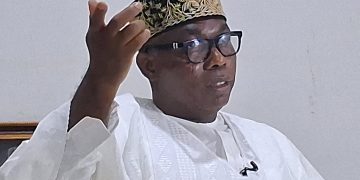
The Minister of Information and National Orientation, Mohammed Idris, stated this in London during a world press conference ahead of President Tinubu’s official visit to the United Kingdom at the invitation of King Charles III.
In a statement, Rabiu Ibrahim, the minister’s Special Assistant on Media, quoted him as saying that the reforms being implemented under the administration’s Renewed Hope Agenda are designed to stabilise the economy, restore fiscal discipline, and create a more attractive environment for investors.
According to him, initial outcomes of the reforms are already visible across key sectors of the economy.
“Early signs of progress from the economic reforms are already visible, with investor confidence improving across key sectors of the economy,” the minister said.
He added: “Inflation has halved since 2023, trade surplus is expanding, and the Central Bank’s Purchasing Managers’ Index has recorded fifteen consecutive months of growth, reflecting renewed momentum in Nigeria’s manufacturing and services sectors.”
Idris explained that the removal of petrol subsidy and the harmonisation of multiple foreign exchange regimes were among the major policy decisions taken by the administration to strengthen fiscal transparency and improve economic sustainability.
He noted that reforms in the oil and gas sector have also boosted Nigeria’s attractiveness to global investors.
“These reforms, alongside a series of presidential executive orders in the oil and gas sector, have made Nigeria Africa’s most attractive destination for oil and gas investment for two consecutive years, attracting over eight billion dollars in Final Investment Decisions from major international companies,” he said.
“Each of these investment dollars represents jobs for Nigerians, technical skills development, revitalised communities and stronger revenues for governments at all levels.”
The minister further disclosed that Nigeria’s external reserves have strengthened significantly, exceeding 50 billion dollars as of February 2026.
He said part of the reserves are now held in gold as part of the country’s strategy to diversify its financial assets.
Idris also highlighted ongoing reforms aimed at improving the ease of doing business and strengthening Nigeria’s credibility in the global financial system.
According to him, Nigeria recently exited the Financial Action Task Force grey list after implementing reforms targeted at combating money laundering and illicit financial flows.
He added that the government will soon introduce a Customs Single Window, a unified digital platform designed to connect trade agencies, importers and exporters in order to streamline documentation processes and improve efficiency in international trade.
The minister said the reforms are also being complemented by large-scale infrastructure investments across the country, including the Lagos–Calabar Coastal Highway, the Sokoto–Badagry Super Highway and the Ajaokuta–Kaduna–Kano Gas Pipeline.
“These projects are designed to improve economic connectivity and strengthen industrial growth across Nigeria,” he said.
Idris reaffirmed the government’s commitment to sustaining the reform agenda to ensure that democracy delivers tangible benefits to Nigerians.
“The administration of President Tinubu remains focused on stabilising the economy, expanding opportunities, strengthening social protection and investing in long-term national development,” he said.