….To isolate most heinous cases for execution
….Moves to criminalise ritual killings, backs state police
The Ogun State Government has declared that it will proceed cautiously on the enforcement of death sentences, stating that only the most grievous and premeditated cases will be considered for execution, while others may be reviewed for possible redemption.
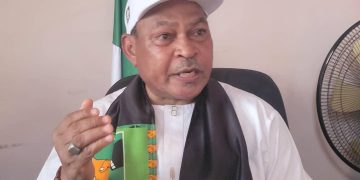
Attorney-General and Commissioner for Justice, Mr. Oluwasina Ogungbade (SAN), disclosed this during an interview on Frontline, a programme on Eagle 102.5 FM, Ilese-Ijebu, stressing that capital punishment requires painstaking deliberation because of its irreversible nature.
Ogungbade noted that although violent crimes such as ritual killings, kidnapping and other heinous offences remain a concern in the state, the government would not rush into carrying out executions without thorough scrutiny.
“Because of the finality of the death penalty, we want to isolate cases where the sentence must be carried out as pronounced by a court of law. We do not want to rush the process,” he said.
The commissioner observed that Ogun has a significant number of inmates on death row, largely because the last execution in the state was carried out in 2002.
He clarified that the ongoing review does not involve reopening concluded trials or seeking fresh evidence, as the affected cases had already been adjudicated by competent courts.
Rather, according to him, the state is examining the nature of each crime, particularly the level of planning and brutality involved, to determine whether the ultimate penalty should be enforced.
“Some crimes, like planned ritual killings or child abduction, leave no room for leniency. But in cases where a person caused death in a fit of anger, such a person may not necessarily pose a continuing danger to society if given another chance,” Ogungbade explained.
He further revealed that the State Prerogative of Mercy Board has not granted pardons to convicts found guilty of ritual killings, kidnapping or sexual offences.
“We do not want to send conflicting signals. If we recognise that these crimes are prevalent and dangerous, we cannot at the same time grant pardon to those convicted of committing them,” he said.
On legislative reforms, the Attorney-General disclosed that a new bill specifically criminalising ritual killings has been finalised and will be transmitted to the Ogun State House of Assembly within three weeks.
He explained that suspects are currently prosecuted under existing murder or corpse-desecration laws, which he said do not adequately address the peculiar menace of ritual-related crimes.
“This proposed legislation is the first of its kind in Nigeria. It is designed to strengthen deterrence and send a strong message that ritual killings will attract severe consequences,” he added.
Ogungbade also raised concerns over what he described as the growing misuse of security agencies in purely civil disputes, warning that such practices overburden law enforcement and undermine due process.
Citing a recent incident in Mowe where a woman was allegedly arrested at the instance of her landlord over a tenancy dispute, he stressed that contractual disagreements and property conflicts should be resolved through civil litigation, not police intervention.
“If someone has a contract dispute or a disagreement over property, the proper channel is to instruct a lawyer and seek redress in court — not to involve the police or the army,” he said.
He acknowledged that certain disputes may contain both civil and criminal elements but insisted that the distinction must be carefully maintained.
“Sometimes the lines are blurred, but they still exist. Each case must be treated on its merits. Police officers who overstep in civil matters are subject to disciplinary action,” he warned.
The Attorney-General identified land disputes as a major challenge in Ogun, attributing the trend partly to the state’s proximity to Lagos and increasing land value.
“When land becomes scarce and valuable, disputes are inevitable. We have filed charges against traditional rulers to send a clear message that no one is above the law,” he said.
He added that land-related crimes, including illegal occupation and land grabbing, are evolving and require constant legal vigilance and firm prosecution.
On judicial reforms, Ogungbade emphasised that expanding the number of judges must be matched with adequate infrastructure to ensure effective justice delivery.
He noted that the Federal Government had recently increased the number of judges in the appellate and Federal High Courts to reduce case backlog and improve efficiency.
According to him, Ogun State plans to adopt a similar strategy by strengthening court infrastructure before expanding judicial capacity.
“You cannot simply add judges without providing courts, tools and support for them to function. An efficient justice delivery system is non-negotiable for peace, investment and public confidence,” he said.
Ogungbade also reaffirmed the state government’s support for the establishment of state police, arguing that locally controlled policing would enhance security response and community trust.
“It is difficult for a force headquartered in Abuja to effectively police every nook and cranny of the country. Policing must be locally grounded,” he stated.
He clarified that state police would complement, rather than replace, the federal police structure, ensuring quicker response to crime-prone areas while maintaining professionalism and accountability.
“State police is not about undermining the federal structure; it is about enhancing public safety and making law enforcement more accessible and responsive to the people,” he added.
The commissioner assured residents that the state would continue collaborating with federal authorities and community stakeholders to strengthen justice administration and security across Ogun.