With the increasing burden of maintaining diabetes in Nigeria and the high cost of drugs, governments at the State and Federal levels have been told to subsidise the cost of diabetes management, including medications and monitoring devices, to alleviate the sufferings of Nigerians living with the condition.
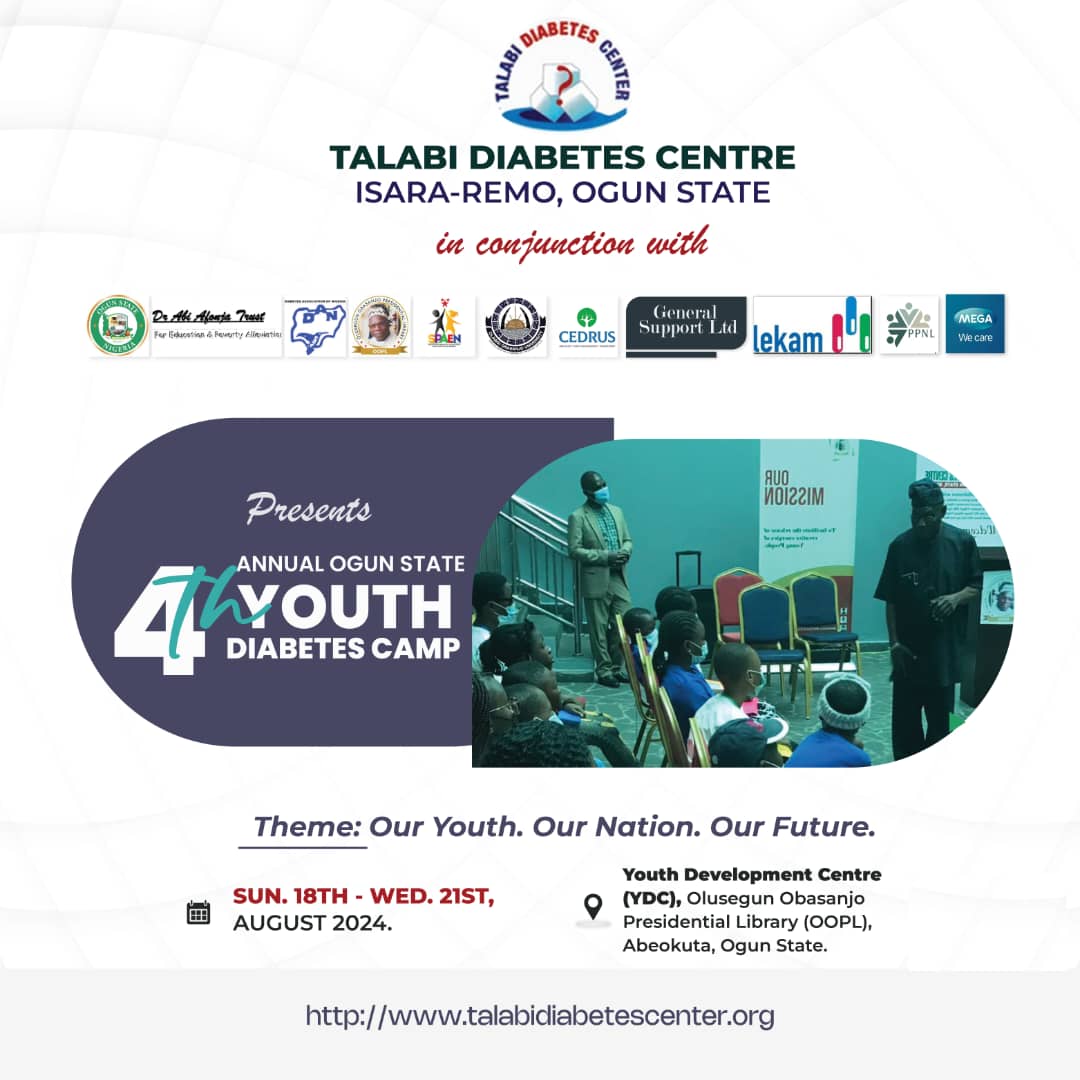
The call was made during the 4th Annual Ogun Youth Diabetes camp meeting of Talabi Diabetes Center held from Sunday 18th August, 2023 to Wednesday 21st August, 2023 at the Youth Development Centre, Olusegun Obasanjo Presidential Library, Ogun state,
Speaking to Journalists at the sideline of the event, the Permanent Secretary, Ogun State Ministry of Health, Dr Kehinde Oladehinde said the government is aware of the high cost of drugs and other challenges facing the Diabetes patients, he said the government will continue to look at ways to make drugs affordable to the people that needed them.
He said just like foodstuffs and other consumables, the challenges facing Nigerians are receiving optimal attention from the government, the only thing that is needed is patience and hope.
He said the State government is a major collaborator in the annual Talabi Diabetes camp meeting, and will continue to encourage individuals and corporate organizations that are ready to partner with the government.
Also speaking, Dr Olubiyi Adesina, the Coordinator, Talabi Diabetes Center, Isara Remo lamented the number of people dying from the disease due to lack of knowledge and high cost of drugs
He said Diabetes is currently the most expensive chronic disease in the country today, saying that it’s unfortunate that, people with diabetes, particularly those with type 1 diabetes, spent a lot of money to procure drugs and other expenses to treat the disease.
He said the cost of anti diabetic drugs and monitoring devices had risen beyond the reach of many Nigerians living with the disease with most of them no longer able to achieve diabetes control as recommended by the International Diabetes Federation.
He said some neighboring countries the governments in such countries made insulin available for the patients free of charge, saying that is unfortunate that a lot of people, both children and adults had died because they cannot afford medications.
He said the 4th camp meeting witnessed participants across the country and a lot of awareness and hope messages are been relayed to these patients through various meetings and programmes.
Salient Times report that the annual Ogun Youth Diabetes Camp is a collaborative effort between Talabi Diabetes Centre, Isara Remo, Olabisi Onabanjo University, Ago Iwoye, Remo North Local Government, Isara Remo, Non-communicable Diseases desk of the Ogun State Ministry of Health, Diabetes Association of Nigeria (DAN) Ogun State Chapter, Society for Paediatric and Adolescent Endocrinologists of Nigeria (SPAEN), Ogun State Chapter, Youth Development Centre (YDC) of the Olusegun Obasanjo Presidential Library (OOPL) and the Late Dr. Abi Afonja Trust and Latifundium, Joga Orile.
It was also gathered that Support was also received from Pharmaceutical companies like Mega, Lekam, Philips, and General merchant companies like General Support ltd, and Cedrus group.
It was learnt that Type 1 diabetes is a life-long disease. It occurs when the body’s immune system destroys the insulin producing cells in the pancreas within the abdomen. Insulin normally helps to control blood sugar levels. Once insulin is no longer produced, the blood sugar levels go up astronomically leading to symptoms such as excessive urination, excessive thirst, excessive hunger, excessive water intake, loss of weight and in a lot of cases coma.
Other symptoms include blurring of vision, slow healing of wounds and recurrent infections.
The exact cause is still unknown but it has been noted that there is a strong genetic risk. It is also thought that factors like viruses or environmental toxins can trigger it.
It can occur in children and adults but it is commoner in children.
Its treatment is life-long daily injections of insulin. Blood sugar levels must also be monitored multiple times daily with a glucometer.
The 4th Annual Ogun Youth Diabetes Camp: this edition had in attendance 36 young people (22 females and 14 males) with Type 1 diabetes who were between the ages of 10 and 25 years, 6 mothers/caregivers, 1 father and 1 observer. Participants were from Enugu, Oyo, Kwara, Lagos and Ogun States and Abuja.
During the meeting, Participants noted the persistent difficulties of living with Type 1 diabetes in Nigeria which includes having multiple daily injections of insulin which price has now gone through the roof with prices of insulin pen averaging eighteen-thousand Naira. Each pen will be fully used up within a week in most cases. They also painfully noted the discrimination and isolation they face in schools both from teachers and other pupils.
“In addition, the cost of Glucometers used to monitor blood sugar levels now average fifteen thousand Naira and the box of strips to be used with the Glucometers costing about twelve thousand Naira.
The meeting also discussed the issue of discrimination and the need to ensure that information about diabetes and what students and teachers can do to support their peers/pupils living with diabetes is widely disseminated in schools.
“There is also the need for more bodies across the country to support/organize educational/support sessions for young people living with diabetes.
Participants also said the onus is on the Federal Ministry of Health and Ogun State Ministry of Health to continue to train Health Workers on diabetes care and make free Insulin and Glucometers available as occurs in other climes to support these young people living with diabetes.