Our Policies Are Working, $1bn Came Into The Market In Past Few Days – Cardoso
…..Calls For Moderation Of Demands For Forex
…..says Supply shocks, hyper-inflation cause of hunger, hardship
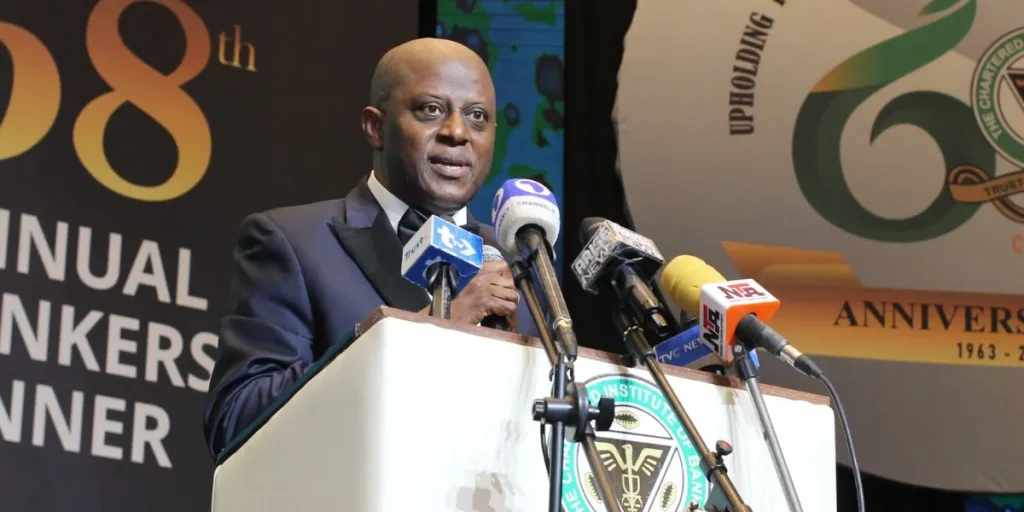
The Governor of the Central Bank, Yemi Cardoso says the measures taken so far by the apex bank to stabilize foreign exchange rates have started yielding positive results.
He noted that these measures would help to stabilise the foreign exchange rates and minimize the distortion that high exchange has on inflation, as they are closely related.
Cardoso, who disclosed this during a briefing of the Joint Senate Committee on Finance, Banking, Insurance and Financial Institutions on Friday, said that $1bn has come into the Nigerian market in the past few days through the CBN interventions.
“We have already begun to see shifts in the positive direction. Indeed they (CBN measures) have already started yielding early results with significant interest from foreign portfolio investors which was a concern. That has already begun to supply the much-needed foreign exchange to the economy.
“For example, upward of the past few days, we have had over $1 billion that has come into the market, and this quite frankly has answered the question of if our policies are working,” Cardoso said.
The CBN Chief said with the numbers available, he can say that the market has been responding to the policies they have put in place.
He added that measures aimed at improving US dollar supply into the Nigerian economy have significant potential in taming the volatility of the exchange rate and in turn moderating inflation.
He, however, said that for these measures to be sustainable, Nigeria must as a country moderate our demands for foreign exchange.
While the CBN according to him is working hard to restore credibility to the central bank, he maintained that the genuine issue impacting the exchange rate is the demand for US dollars for business and personal needs.
The CBN Governor also assured that inflation is expected to decline this year using the inflation targeting framework and moderating to 21.1 percent.
The committee had on January 31 summoned the Central Bank Governor to appear before it.
The move comes amid pressing concerns about the state of the economy and the sharp decline of the naira in the foreign exchange market.
The Senators are asking the CBN to give explanations on the myriad of economic challenges the country is currently facing.
We must moderate our forex demands
The Central Bank of Nigeria, (CBN), Olayemi Cardoso has implored Nigerians to cut down on their demand for forex.
“We must moderate our demands for forex. Where there are opportunities to substitute locally, so we should.” the CBN governor said during an appearance before the Senate Joint Committees on Finance, Banking and Other Financial Institutions and National Planning on Friday.
While making this request, Cardoso advised the Federal government to look into improving the educational medical sectors as a means of dissuading people from travelling outside the country to get better services
”The total quantum for education and medical is more than our external reserves. If we can up our game on education, and medicals, there won’t be the need for our people to go abroad.”
The continual scramble for the dollar by Nigerians to pay tuition fees as well as medical and import bills has continued to pile pressure on the Niara. With limited access to forex, many have turned to the black market as a viable option,
Speaking on monetary policies to tackle the ongoing inflation in the country, the CBN governor, insisted the switch to a single rate was an intentional model to help improve investment credibility in the country
”We are working very hard to bring back credibility to the CBN and many of the investors who over the years have considered the environment inimical, we don’t have to beg them,” he said
”If we are doing the right thing, investors will come. For them to come, they have to believe that you will do the right things. I also want to say that in establishing credibility, there are certain things that we need to do.”
He equally noted that the apex bank had little power to intervene but would explore partnerships to ease the Forex crisis.
Supply shocks, hyper-inflation cause of hunger, hardship – CBN Gov, Cardoso
Meanwhile Governor of the Central Bank of Nigeria, Olayemi Cardoso has disclosed factors responsible for hunger in the nation, saying there was supply shock of food items preluding yuletide and the distribution challenges due to insecurity.
In his address at a well-attended public hearing, the apex bank boss attributed hyper inflation to organic food shortages but added that the government was addressing the menace through fiscal policies which may take time to work out.
Cardoso said: “Headline inflation surged to 28.92%, propelled by food shortages, distribution challenges, and seasonal trends. The festive season’s consumer demand upsurge, following subdued periods due to energy and foreign exchange reforms, contributed to this trend, persisting from November through December yearly.
“The upward trend of food inflation is primarily due to supply shocks caused by insecurity, climate-induced factors such as flood and rainfall shortage in some cases, inefficient, subsistent and seasonal farming practices as well as importation bottlenecks that have impacted the prices of imported food items.
“In December 2023, the economic landscape revealed significant shifts. The headline inflation stood at 28.92% in December 2023 as against 28.20 % in November, food inflation was 33.93% as against 32.84% in November, while core inflation was 23.06% as against 22.38% in October 2023.
“Anecdotal evidence indicates that recent exchange rate volatility has fuelled more foreign demands for agricultural products, especially from neighboring countries.
“While this presents an opportunity to expand and boost agricultural output, hence creating jobs in the sector, supply constraint exacerbated demand, instigating more inflationary pressures.
”Given this backdrop, the emergency committee on food security set up by the President has been taking a number of measures and we see an end in sight to the persistent rise in food inflation.
“On our side at the CBN, we have responded with significant monetary policy tightening to reign in inflationary pressure.
”Empirical analysis has established that money supply is one of the factors fueling the current inflationary pressure. For instance, an analysis of the trend of the money supply spanning over 9 months shows that M3 increased from N52.01 trillion in January 2023 to N68.25 trillion in November 2023 representing N16.24 trillion or 31.22 percent increase over the period.
“Increase in Net Foreign Asset (NFA) following the harmonization of exchange rates and the N3.22 trillion ways and means advances were the major factors driving the increase in money supply. I am pleased to note the Fiscal Authorities efforts in discontinuing ways and means advances.”
Responding to a question from Senators, Cardoso said there were some policies in the immediate past administration that have been stopped due to incompatibility in the present administration, particularly the “Ways and Means”, which seems to have been abused.
“This is also in compliance with section (38) of the CBN Act (2007), the Bank is no longer at liberty to grant further ways and means advances to the Federal Government until the outstanding balance as of December 31, 2023, is fully settled.
“The Bank must strictly adhere to the law limiting advances under ways and means to 5 percent of the previous year’s revenue.
“We have also halted quasi-fiscal measures of over 10 trillion naira by the Central Bank of Nigeria under the guise of development finance interventions which hitherto contributed to flooding excess Naira and raising prices to the levels of Inflation we are grappling with today.”
The interactive session was attended by the Chairman, Senate Committee on Banking, Insurance, and Other Financial Institutions, Senator Mukhail Adetokunbo Abiru, Chairman, Senate Committee on Finance, Senator Mohammed Sani Musa, Chairman, Senate Committee on National Planning, Senator Abdullahi Yahaya, Vice Chairmen and members